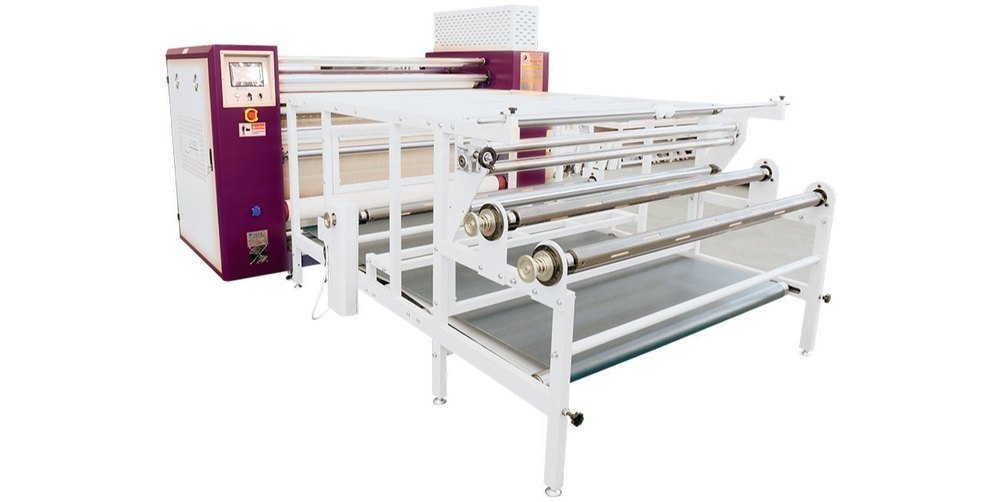
In the digital textile industry, 1600 mm fusing machines primarily refer to heating machines, heat presses, or calendering systems used for processes like DTF, Sublimation, and fabric fixation after printing.
These machines apply controlled heat and pressure to bond inks or transfers onto fabrics, supporting widths up to 1600 mm for efficient production.
They are essential for workflows involving printers, where infrared drying or post-fusing ensures colorfastness.
Key Types
- Fusing Machines: Automatic models for garments and fabrics.
- Sublimation Calenders: Roller heat presses like the Yinghe 1.6m model for continuous cloth transfer printing.
- Pad-Dry or Steaming Units: High-temperature systems (up to 250 degree celsius) for drying and fixation, available in 1600 mm widths.
Average power consumption
1600 mm heat press machines, commonly used in digital textile printing for DTF and sublimation, typically feature rated power between 6-12 kW, but average consumption during operation is lower at 4-8 kW depending on load, temperature, and efficiency.
Power Ratings
Installed power indicates maximum draw during heating, while average reflects steady-state use:
Entry-level models: 12 kW rated, around 6-8 kW average.
Roller Calenders: 6.4-26 kW rated, 17 kW/h average consumption reported for continuous 1600 mm models.
Smaller or pneumatic presses may drop to 1.5-2 kW average, but industrial textile units exceed this for fabric widths.
Factors Affecting Consumption
- Duty Cycle: Peaks at full power (10-36 kW startup), stabilizes 50-70% lower once at temperature (e.g., 200 degree celsius).
- Usage: Continuous production (20-100 m/h) uses more than intermittent; oil-heated drums are efficient at~7 kW for 1600 mm.
- Efficiency Tips: Standby modes, maintenance, and 3-phase 415V setups in India reduce bills; expect 20-50 kWh daily for 8-hour runs.
How heating method affects warm-up time and energy use
Heating methods in 1600 mm heat presses for digital textile printing significantly influence warm-up time and energy use, with oil-heated drums outperforming electric platens or infrared systems in efficiency.